Luhur Batukaru Temple

Questions about this place?
Ask about access, facilities or your visit in BaliFinder chat.
Chat with BaliFinderAbout this destination
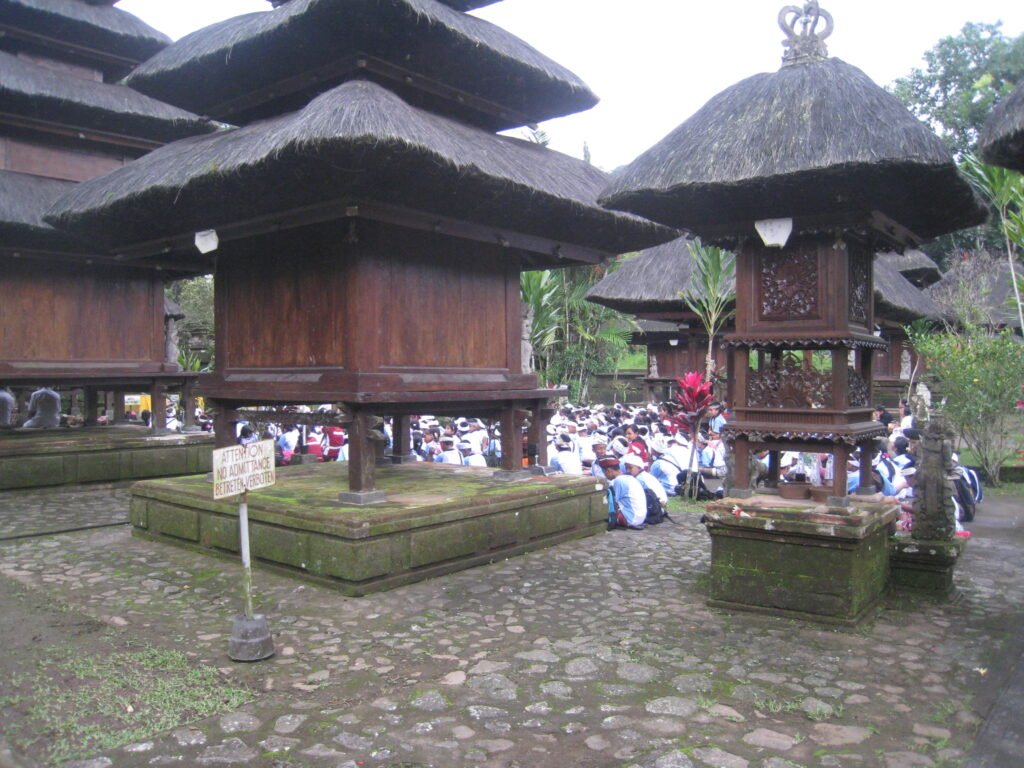
Luhur Batukaru Temple, also written Batukau, lies in Wongaya Gede, Penebel, in Tabanan’s mountain landscape. The forest setting and continuing religious use make it a place to approach quietly and with time to understand local guidance. A visit is about the sacred complex and its surroundings, not gaining access to every courtyard.
Tabanan’s government records regular worship here, including large community and government gatherings. That continuing use is central to planning: ceremonies and customary rules take priority over a sightseeing schedule. Ask what visitors may see on the day and accept any restriction without trying another entrance.
Place the temple within the landscape
UNESCO’s evaluation of Bali’s cultural landscape describes the temple’s position above the rice terraces within the Batukaru temple system. This helps connect the mountain, water and cultivated land you pass on the way. The temple is part of a wider living landscape rather than an isolated architectural object.
A knowledgeable local guide can explain those relationships more clearly than a hurried photo stop. Ask about the role of the temple and the areas visible to visitors. Avoid assuming that every shrine has the same function or that its significance can be inferred from roof tiers alone.
Check entry rules before your visit
Wear respectful clothing and follow the site’s requirements for a sarong, sash and access. Ask staff about any additional customary restrictions that apply to your group. The appropriate visitor boundary can change during religious activities, and permission to enter one area does not extend automatically to another.
Families should specifically ask about young children’s entry. A 2025 Tabanan government report describes a local rule concerning children who have not yet lost their milk teeth and an associated reading area for children waiting while adults worship. Confirm how this applies to your intended visit before making a long journey.
Observe without interrupting worship
Keep a clear route for people carrying offerings and avoid standing directly in front of worshippers for a photograph. Speak softly, keep phones unobtrusive and ask before photographing a ceremony closely. If staff indicate a place to wait, use it rather than crowding a doorway.
Do not touch shrines, climb structures or treat a pond or water feature as a recreational bathing spot. Ask a guide to distinguish visitor areas from spaces used for religious purposes. Participating in any ritual requires explicit local guidance; it is not implied by purchasing admission.
Prepare for the mountain setting
Bring a light rain layer and footwear with grip. Forested highland conditions can differ from the coast, and paths may be damp even when your hotel morning was sunny. Keep camera equipment protected and leave room in the itinerary for slower travel in rain or mist.
Ask about the route and steps if someone in your group has mobility limitations. Confirm the current visitor hours, admission or contribution arrangements directly rather than relying on a fixed price in an old guide. Keep small cash available for locally requested payments.
Pair the temple with the right Tabanan stops
Wongaya Gede Village provides context for the surrounding community, while Jatiluwih Rice Terraces can help connect temple and agricultural landscape. Plan the drive realistically with a local operator and avoid compressing both into brief stops simply to add more attractions.
Mount Batukaru is a separate trekking undertaking, not an extension of a routine temple visit. Do not follow an apparent trail into the mountain without current access information and appropriate arrangements. A cultural visit and a summit trek require different preparation and amounts of time.
Photo: MajaK. / Wikimedia Commons, CC BY 3.0. No editorial changes by BaliFinder; WordPress may generate display sizes. Source photograph dated Taken.