Jatiluwih Rice Terraces
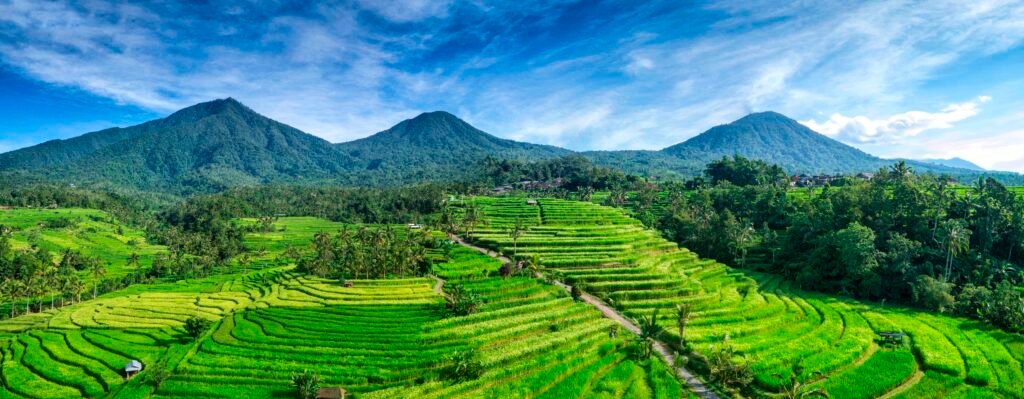
Jatiluwih Rice Terraces spread across the uplands of Penebel in Tabanan. This is a place to spend time walking through a working agricultural landscape, with the shape and colour of the fields changing through the rice-growing cycle. Choose Jatiluwih when you want the landscape itself to be the main activity, rather than a brief stop at a roadside photo platform.
The terraces are connected to Bali’s subak tradition. UNESCO describes subak as a cooperative system that links water management, farming communities and water temples. Jatiluwih lies in the Catur Angga Batukaru landscape, part of the wider Cultural Landscape of Bali World Heritage property. Understanding that connection gives the visit more meaning than simply looking for the greenest field.
Walking through the rice terraces
Start by checking the marked routes and your available time with the ticket staff. Choose a walk that leaves room for photographs and a comfortable return, rather than selecting a long route because its distance looks short on a map. Paths through agricultural terrain can feel different after rain.
Watch for the channels and changes in elevation that make the terraces work. Keep to the designated paths and give farmers room to carry out their daily tasks. Do not walk through planted beds for a photograph or pick rice and other plants. The official management rules also prohibit motorcycles and vehicles on the trekking routes.
What to expect from the scenery
The fields are not permanently bright green. Planting, growth and harvesting produce different textures and colours, while cloud and mountain weather can change the view. Plan to appreciate the agricultural setting you find rather than expecting an exact reproduction of a travel photograph.
Bring footwear suited to a walk, sun protection and a light rain layer. If you would rather avoid a long trek, ask about a shorter permitted route. A slower outing with a meal and a modest walk can be more satisfying than rushing through several highland attractions.
Admission and extras
On 16 October 2026, the official Jatiluwih website listed admission at IDR 75,000 for foreign adults, IDR 50,000 for foreign children, IDR 25,000 for domestic adults and IDR 15,000 for domestic children. Confirm the applicable category and current price before buying. The site lists cycling and evening attractions separately, so do not assume that a standard entrance ticket includes those activities.
Drone use has separate management requirements and charges. Ask before flying; ordinary admission is not permission for aerial photography or entry into sacred areas.
Getting there and planning your day
Jatiluwih is in Penebel, Tabanan, inland from the south-coast resort areas. Arrange the return journey as well as the drop-off and allow flexibility on the winding approach. Tell your driver whether the visit is mainly a viewpoint stop or a substantial walk so the schedule reflects your plan.
A countryside route can include Luhur Batukaru Temple, provided you leave time for its separate access and dress requirements. Subak Museum offers another way to explore the farming theme. These are additional stops, not parts of the terrace entry ticket.
Frequently asked questions
Is Jatiluwih the same place as Tegallalang?
No. Ceking Tegallalang Rice Terrace is a separate destination in Gianyar. Choose between them according to your route and the kind of walk you want, rather than treating the names as interchangeable.
Can I enjoy Jatiluwih without a long hike?
Yes. Ask for a shorter permitted route and build the visit around the landscape and a relaxed break. Check the path surface and access arrangements if anyone in your group has mobility needs.
Sources: Jatiluwih official visitor information; UNESCO Cultural Landscape of Bali.
Photo: Imacim / Wikimedia Commons, CC BY-SA 4.0. Original photograph; no editorial alterations. Display sizes may be generated by WordPress.
