Kusamba Traditional Salt Making
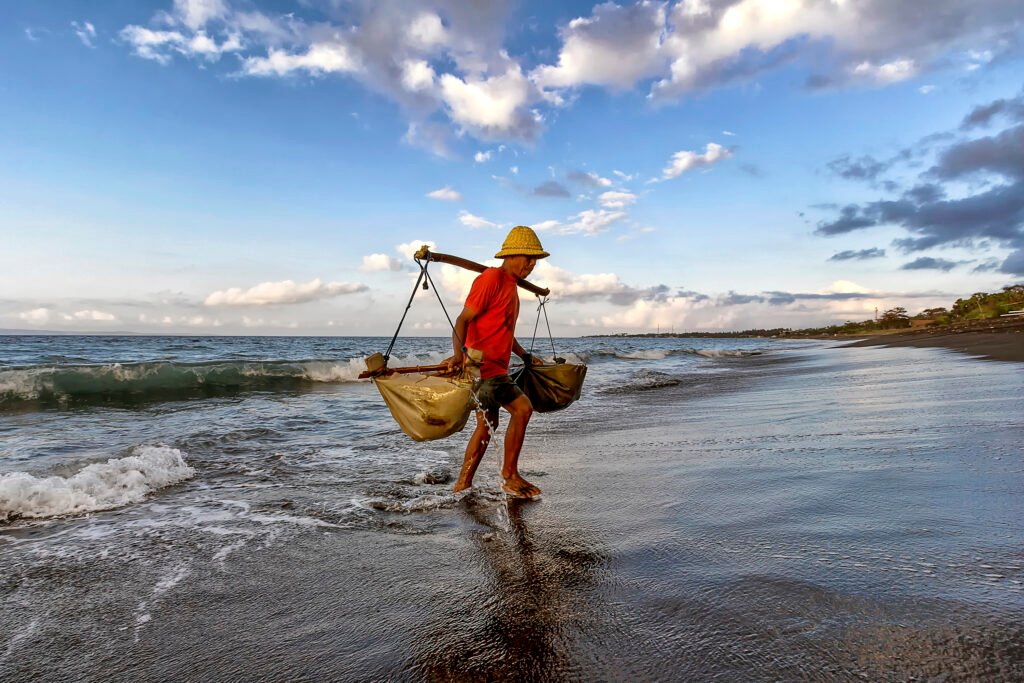
Photo: Wiaskara / Wikimedia Commons, CC BY-SA 4.0. No editorial changes by BaliFinder; WordPress may generate display sizes. Source photograph dated 2015-08-27.

Photo credits
1.
Photo: Wiaskara / Wikimedia Commons, CC BY-SA 4.0. No editorial changes by BaliFinder; WordPress may generate display sizes. Source photograph dated 2015-08-27.
Questions about this place?
Ask about access, facilities or your visit in BaliFinder chat.
Chat with BaliFinderAbout this destination
Kusamba Traditional Salt Making offers a close look at a coastal livelihood that depends on skill, weather and patient work. The attraction is the production process itself, not a performance that runs on a fixed timetable. Arrange a visit with a producer and you can understand how the sea, sand and carefully prepared drying surfaces contribute to a distinctive local product.
Where the tradition continues
Klungkung’s investment and industry information identifies salt-making areas in Dusun Bias and Dusun Rame in Kusamba, Dawan district. The regency also recognises Uyah Kusamba as an important local product and documents support for producer groups. These are working communities, so the most useful first step is to identify a host who currently welcomes visitors.
Ask your accommodation, guide or village contact to confirm a specific production site. A general visit to Kusamba Beach does not guarantee that salt will be harvested at the time you arrive. Weather and the stage of production affect what can be seen.
Understand the process in stages
The official local description explains a method in which seawater is applied to prepared sand, concentrated brine is recovered, and the liquid is then dried in split coconut-trunk troughs called palungan. Crystals form through evaporation and are collected as part of the producer’s work.
Ask your host to show which stage is taking place that day. Seeing the equipment without an explanation can make the process difficult to follow, because the finished salt is only one part of a longer sequence. A clear demonstration of the relationship between sand, brine and drying troughs is often the most memorable part of the visit.
Let the producer set the pace
Agree any visit or demonstration fee in advance and ask where it is appropriate to stand. Do not walk across prepared sand, touch the brine or handle production equipment without permission. A surface that looks like an empty patch of beach may be part of the working process.
Photographs can help tell the story, but ask before taking close portraits or filming a producer’s work. Avoid requesting repeated actions solely for a better image. A respectful visit recognises the effort involved and leaves the person free to continue their ordinary production schedule.
Buy salt with useful questions
If you want to purchase salt, ask where it was produced, how it was processed and whether the package contains plain salt or another product. Klungkung’s food and fisheries office documents both plain and iodised products as well as flavoured varieties within local development efforts; labels and ingredients therefore matter.
Keep claims about flavour separate from claims about health. The reason to buy here is the craft, provenance and culinary interest, not an assumption that one type of salt can be used without limits. Choose sealed packaging suitable for travel and check any food-import requirements relevant to your destination.
Plan a coastal culture day
Combine the production visit with Goa Lawah Temple for a different aspect of the same coastal region. Keep appropriate temple clothing available and treat that visit separately from the working beach. Alternatively, continue inland to Kamasan Village to compare two very different forms of skilled local production.
Avoid fixing an exact demonstration time without speaking to the producer. Leave enough room for an explanation and a purchase if desired, and carry water and sun protection for the exposed coastal setting. Keep all packaging and rubbish away from the production area and the sea.
Photo: Wiaskara / Wikimedia Commons, CC BY-SA 4.0. No editorial changes by BaliFinder; WordPress may generate display sizes. Source photograph dated 2015-08-27.