
Rudana Museum
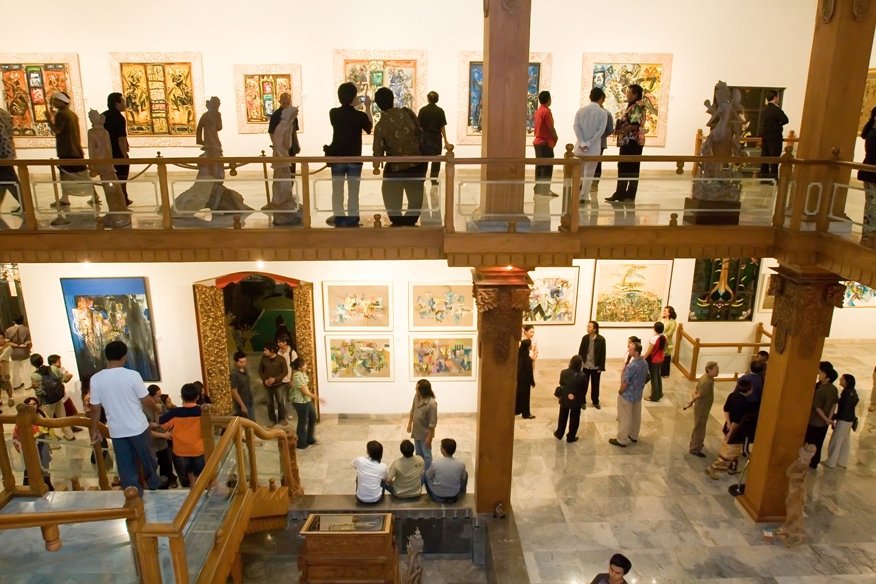
Rudana Museum is an art museum in the Peliatan area of Ubud, presenting work connected with Balinese and wider Indonesian visual culture. It is a useful choice for visitors who want to spend time with paintings and sculpture beyond the town’s commercial galleries. The collection and the building should be approached together, with enough time to see how works are presented rather than simply counting them.
An institution with a cultural purpose
The Indonesian museum catalogue records its founding by Nyoman Rudana and Wayan Olastini and its inauguration in December 1995. The museum was established to make art available for public appreciation and is associated with the Rudana arts foundation. Its architecture draws on Balinese spatial ideas, giving the setting a role in how the collection is experienced.
That context invites visitors to consider a museum as an act of selection and preservation. Which artists appear beside one another, and what relationships does the display suggest? These questions can make a visit engaging without requiring specialist knowledge in advance.
Traditional and modern perspectives
Official descriptions identify Balinese painting traditions alongside modern Indonesian art and work by foreign artists. The national catalogue names artists such as Lempad, Affandi and Srihadi Soedarsono in its account of the collection. Displays can change, so contact the museum if seeing a particular work is essential to your trip.
When moving between galleries, compare technique and composition instead of assuming that “traditional” means unchanging and “modern” means disconnected from local culture. A painter may use familiar stories in a new way, or bring an individual visual language to a recognisable place. Read the dates and labels to support your observations.
A focused viewing route
Choose three or four works that differ noticeably from one another. Spend several minutes with each, looking first at the whole composition and then at a detail. Notice whether the artist uses fine line, broad brushwork, dense patterns or open areas to hold your attention.
If visiting with a companion, compare which work each of you remembers most clearly and why. There is no need to agree on a favourite. The discussion can reveal aspects of colour, expression or storytelling that one person overlooked, making the museum experience more personal and memorable.
Architecture and display etiquette
Look at the building’s arrangement and changes of level from authorised visitor areas. The cultural ministry’s museum monograph discusses a three-level architectural concept, so ask about the route if stairs could be difficult. Do not assume that every floor or room is open under the same conditions on your visit.
Keep bags away from artworks, avoid touching frames or sculpture and follow photography restrictions. Flash, tripods and professional shoots may have different rules from casual phone photography. If you need to make detailed study images, arrange permission before arriving with equipment.
Planning and nearby art stops
Confirm current opening arrangements, admission and guiding availability before travelling specifically to the museum. Use the museum’s precise address in Peliatan rather than a general “Ubud art gallery” destination. Leave time for local traffic and make a pickup plan that does not depend on finding transport immediately outside.
Agung Rai Museum of Art provides a complementary collection and cultural setting. Setia Darma House of Masks and Puppets shifts the focus towards theatrical objects, while Mas Village introduces a workshop and craft context. Select one or two according to your interests rather than rushing through all three on the same day.
Is Rudana Museum the same as a sales gallery?
The museum collection should be distinguished from any separate gallery or retail activity associated with the wider Rudana name.
Do I need to know the artists beforehand?
No. Start with close observation and the labels, then ask staff about works that interest you.
Sources: Indonesian museum catalogue: Rudana history and collection, Museum monograph: architecture and Indonesia Travel: museum overview.
Photo: Budi Sukada, Wikimedia Commons, CC BY-SA 3.0. No editorial changes by BaliFinder; display sizes may be generated.
