Mount Agung

Questions about this place?
Ask about access, facilities or your visit in BaliFinder chat.
Chat with BaliFinderAbout this destination
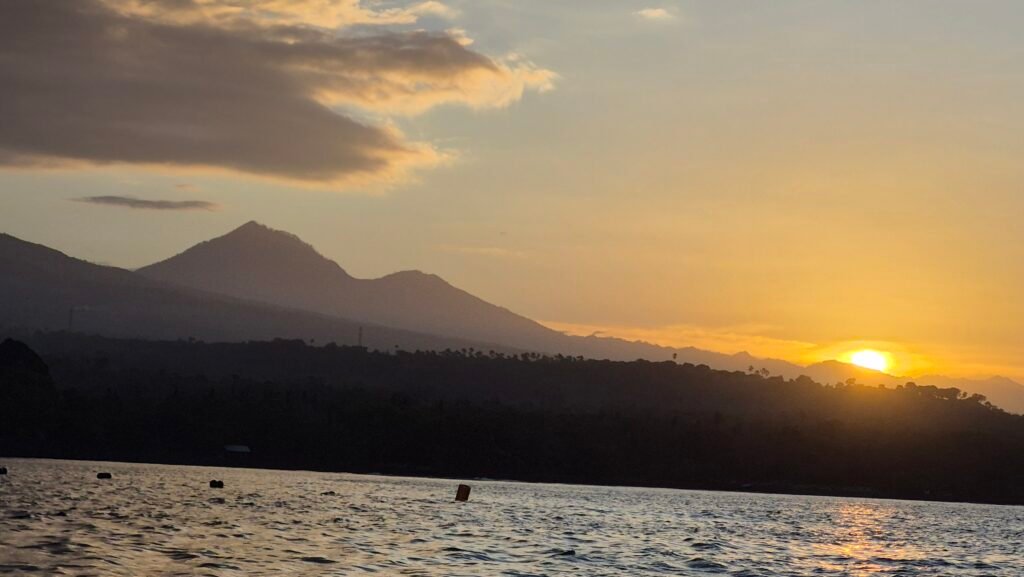
Mount Agung dominates the landscape of eastern Bali and holds a central place in the island’s religious geography. A visit can mean looking across rice fields toward its volcanic cone, exploring a temple on its slopes, or preparing for a demanding guided mountain excursion. Decide which experience you want before booking: these are very different days, with different levels of effort and access requirements.
A sacred mountain in Karangasem
Indonesia’s official tourism portal describes Agung as an active stratovolcano and a sacred mountain associated with Besakih. Its significance is visible far beyond a hiking trail. Temples, ceremonies and the way communities understand the surrounding landscape all deserve consideration when planning a visit.
Treat the mountain as a place of worship as well as an outdoor destination. Follow instructions from local authorities and custodians, respect temporary ceremonial restrictions, and avoid treating shrines or offerings as props. Appropriate behaviour remains important even if your main interest is photography or exercise.
Understand the route before booking
The official tourism guide distinguishes the Pasar Agung approach from the longer Besakih route. These do not promise the same endpoint: the Pasar Agung description refers to a southern crater peak, while the Besakih description concerns the highest summit. Ask a guide to identify the exact start, intended endpoint and turnaround arrangements in writing.
Published climbing times are estimates, not a schedule every visitor can reproduce. Fitness, footing, weather and the group’s pace change the day considerably. A booking labelled simply “Agung sunrise” is insufficient information. Find out how long you will be walking, how much is in darkness, what equipment is supplied, and how the descent is managed.
Check current access and volcanic information
Use current information from MAGMA Indonesia and the responsible local authorities before committing to a mountain trip. An older blog, a successful climb by another traveller, or an available online booking does not establish that a route is presently permitted or appropriate.
Ask the organiser what happens if authorities restrict access or weather makes the planned route unsuitable. A clear cancellation or rescheduling policy matters more than a guaranteed summit promise. Allow a flexible day in the itinerary and be willing to replace the climb with a lower-elevation visit.
Prepare for the whole outing
Discuss your experience and physical preparation honestly with a qualified local guide. Request a packing list appropriate to the route and forecast, including suitable footwear, lighting, clothing layers, food and water. Confirm transport arrangements at both ends and tell your accommodation when you expect to return.
Do not schedule a tight onward flight or ferry immediately after the planned finish. Mountain outings can take longer than advertised, and the descent also requires energy and attention. Keep the following part of the day uncomplicated rather than attaching several distant attractions to an already demanding activity.
See Agung without climbing
Bukit Cinta Karangasem and Lahangan Sweet offer different ways to include the mountain in an East Bali journey. Their appeal depends partly on visibility, so approach them as landscape experiences rather than guaranteed photographs. Sidemen adds agricultural scenery and a slower village-based stay.
A visit to Besakih Temple offers another perspective, provided you follow the temple’s visitor arrangements and dress requirements. Choose one realistic area for the day; a map makes distances appear easier than the winding roads and time spent at each place suggest.
Photo: Suhaasps3 / Wikimedia Commons, CC0. No editorial changes by BaliFinder; WordPress may generate display sizes. Source photograph dated 2025-06-30.