Meduwe Karang Temple
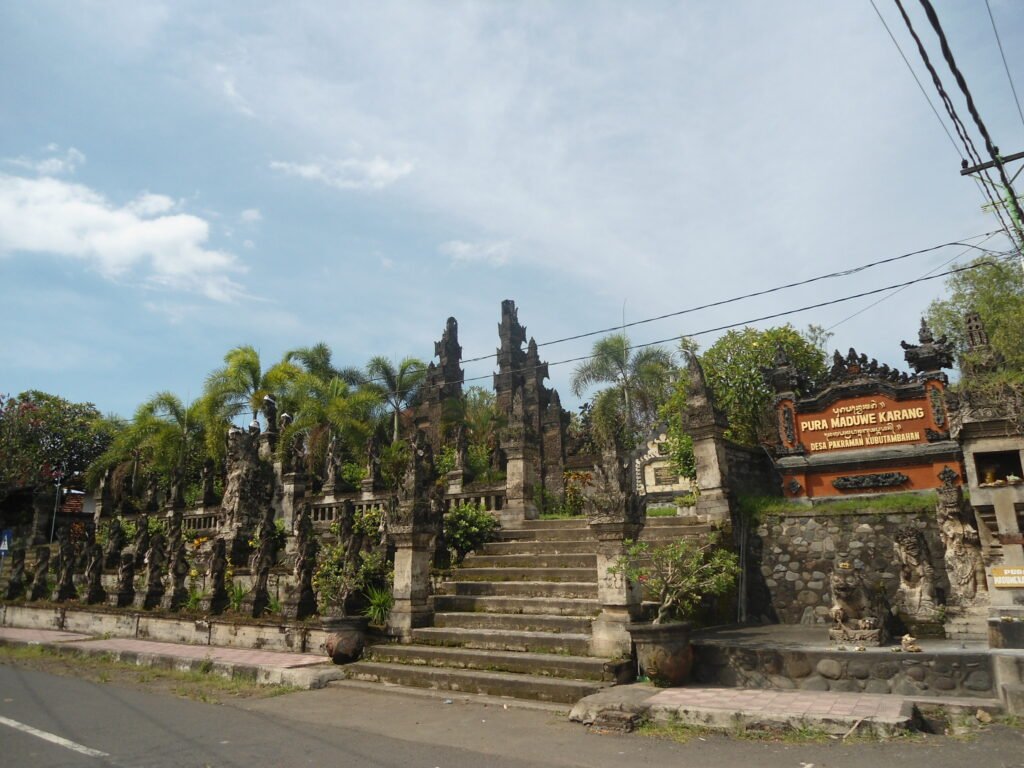
Photo: DayakSibiriak / Wikimedia Commons, CC BY-SA 4.0. No editorial changes by BaliFinder; WordPress may generate display sizes. Source photograph dated 2017-04-12.

Kredit foto
1.
Photo: DayakSibiriak / Wikimedia Commons, CC BY-SA 4.0. No editorial changes by BaliFinder; WordPress may generate display sizes. Source photograph dated 2017-04-12.
Butuh informasi?
Tanyakan rute, fasilitas, atau kunjungan melalui chat BaliFinder.
Chat admin BaliFinderTentang destinasi
Meduwe Karang Temple is a Hindu temple in Kubutambahan, east of Singaraja. It is especially rewarding for visitors interested in carved reliefs and the relationship between religious life and agriculture in North Bali. The temple’s name and role are connected with cultivated land, giving the decoration a context beyond its visual appeal.
The Buleleng cultural account places the temple in Kubuanyar and explains its association with dry-field and garden cultivation. A local guide can help connect that agricultural role with the forms and stories visible in the architecture. The visit works best when you allow time to look closely without interfering with worship.
Land, cultivation and the temple’s role
The official account explains meduwe in terms of possession and karang as dry land or garden land. It associates the temple with people working such agricultural holdings. This is a useful reminder that Bali’s sacred landscapes include more than the rice terraces most visitors recognise.
Treat that context as a starting point for questions rather than assuming every agricultural temple has the same function. If a custodian or guide is available, ask how the temple relates to the surrounding community. Keep explanations in an appropriate place where the group does not block a route used by worshippers.
The distinctive reliefs
The cultural office highlights several relief subjects, including a figure on a bicycle associated with Nieuwenkamp, as well as other human figures. The bicycle image is widely noticed because it introduces an unusual subject into the carved architectural setting. Ask the guide to identify it from a permitted viewing position.
Look at the surrounding composition as well as the famous detail. A single unusual carving should not overshadow the rest of the temple. Avoid touching the stone, leaning bags against decorated surfaces or climbing for a better photograph. Lighting changes can be handled by patience and camera settings rather than physical interference.
Visitor etiquette and access
Wear appropriate temple clothing and follow instructions about sarongs, sashes and restricted areas. Do not assume that paying an entrance charge gives access to every courtyard. Religious activities may change what visitors can see on a particular day.
Leave offerings undisturbed and keep voices low. Ask before photographing individuals, especially during prayer. If a particular relief cannot be approached because of a ceremony or restriction, appreciate it from the available position or return at another suitable time.
A practical North Bali cultural day
Beji Sangsit Temple can complement Meduwe Karang with another distinctive architectural setting. Allow time at both rather than treating them as interchangeable photo stops. Air Sanih offers a different kind of visit farther along the coastal route, with separate bathing arrangements.
For a broader understanding of the region, include Gedong Kirtya or Buleleng Museum during a Singaraja stay. Check their opening schedules before fixing the day’s order. Agree transport and pickup details in advance, and keep enough time for meals and slower road sections.
Photo: DayakSibiriak / Wikimedia Commons, CC BY-SA 4.0. No editorial changes by BaliFinder; WordPress may generate display sizes. Source photograph dated 2017-04-12.