Kehen Temple

Butuh informasi?
Tanyakan rute, fasilitas, atau kunjungan melalui chat BaliFinder.
Chat admin BaliFinderTentang destinasi
Kehen Temple offers a rewarding cultural stop in Bangli for travellers interested in architecture and living religious traditions. Its attraction is not a single staged photograph but the arrangement of gateways, shrines and mature vegetation within an active temple setting. Allow time to observe details and understand the space, while accepting that worship and local access instructions take priority over sightseeing.
Architectural details to notice
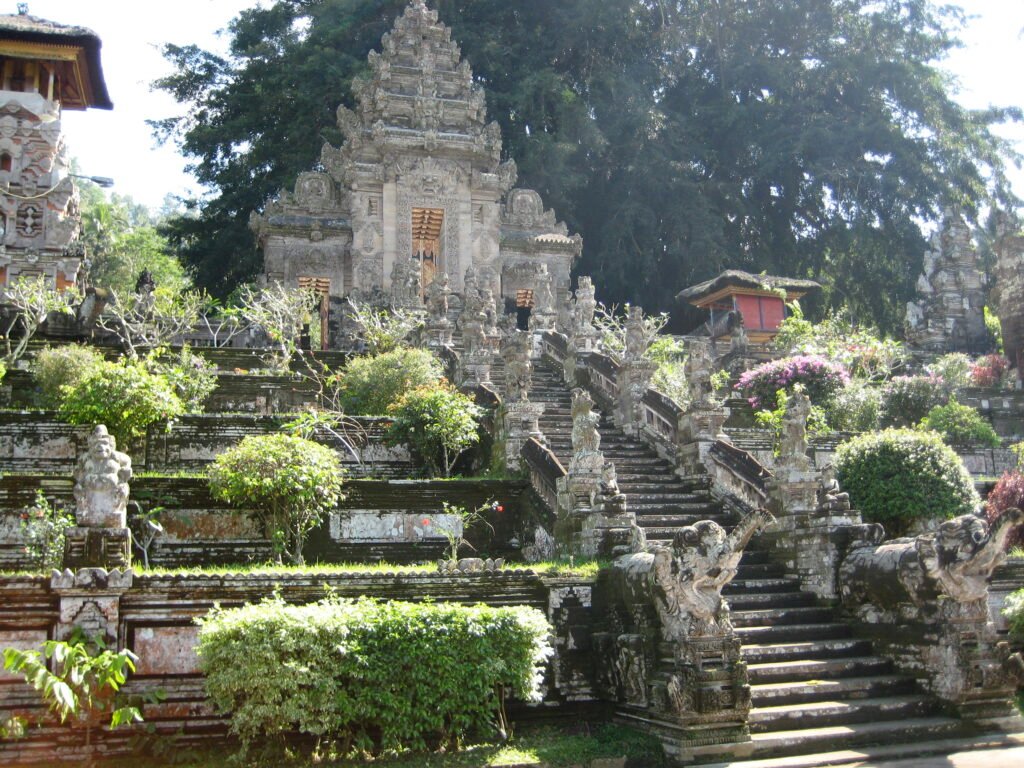
Bali’s provincial tourism office draws attention to Kehen’s enclosed entrance gateway, or candi kurung, rather than the split gateway commonly associated with Balinese temple approaches. It also identifies the bale kulkul associated with the banyan tree as a distinctive feature. A kulkul is a traditional wooden signalling instrument; its setting here is part of what makes Kehen recognisable.
Look at the relationship between the gateway, vegetation and ceremonial spaces instead of trying to enter every doorway. A local guide can explain which features belong to particular uses and which areas visitors may approach. Ask before photographing details inside spaces where worship is taking place, and never move an offering to improve a composition.
Kehen and Bangli’s history
The Bangli government’s account of the town’s history refers to an inscription preserved at Kehen. Its narrative connects a royal instruction in 1204 with the repopulation and rebuilding of Bangli, and that date underlies the town’s anniversary. This gives the temple a connection with local historical identity beyond its visual appeal.
The inscription’s significance does not mean the original object is routinely on public display. If historical interpretation is your main interest, ask what can currently be seen or explained during a visit. Distinguish a guide’s account of traditional narrative from an object or date directly documented in an exhibit.
Plan a respectful temple visit
Wear clothing suitable for a religious setting and follow the temple’s current sarong, sash and entry requirements. Confirm whether any required garments are included with admission or rented separately. Use the official entry process and clarify guide arrangements before beginning a tour rather than leaving costs uncertain until the end.
Move quietly around people praying. Keep access routes clear for ceremonies and do not climb shrines, gates or walls. A closed courtyard should be treated as closed even if it would provide a better view. If you are unsure whether a particular action or photograph is welcome, a brief question to the attendant is more useful than copying another visitor.
Timing and practical considerations
Visit during an unhurried part of your day, especially if you want explanations rather than a quick exterior stop. Check current visitor hours and any ceremony-related changes locally. Published photographs cannot tell you which sections will be accessible on your arrival date.
Wear footwear that manages steps and potentially damp surfaces, and carry water for the wider outing. Visitors with limited mobility should ask about the approach and accessible viewing areas in advance. Arrange a clear meeting point with your driver so that a temple stop does not end with an unnecessary search along a busy road.
Combine Kehen with the surrounding area
Penglipuran Village and Penglipuran Bamboo Forest can extend a Bangli cultural itinerary with settlement architecture and a managed natural landscape. Keep the experiences distinct: the village is a residential community, the forest has its own rules, and Kehen is a place of worship. A considered visit to two or three places is more rewarding than rushing through a long list of entrances.
Is Kehen only a historical monument?
No. Treat it as an active temple whose religious function continues alongside visitor interest.
What makes it visually distinctive?
The provincial tourism office highlights its enclosed gateway and the banyan-associated bale kulkul. Look for those features from permitted visitor areas.
Sources: Bali tourism office: Kehen architecture and Bangli government: local history and the Kehen inscription.
Photo: Esme Vos / Wikimedia Commons, CC BY 2.0. No editorial changes by BaliFinder; WordPress may generate display sizes. Source photograph dated 2009-09-09.