
Gajah Mada Heritage Street
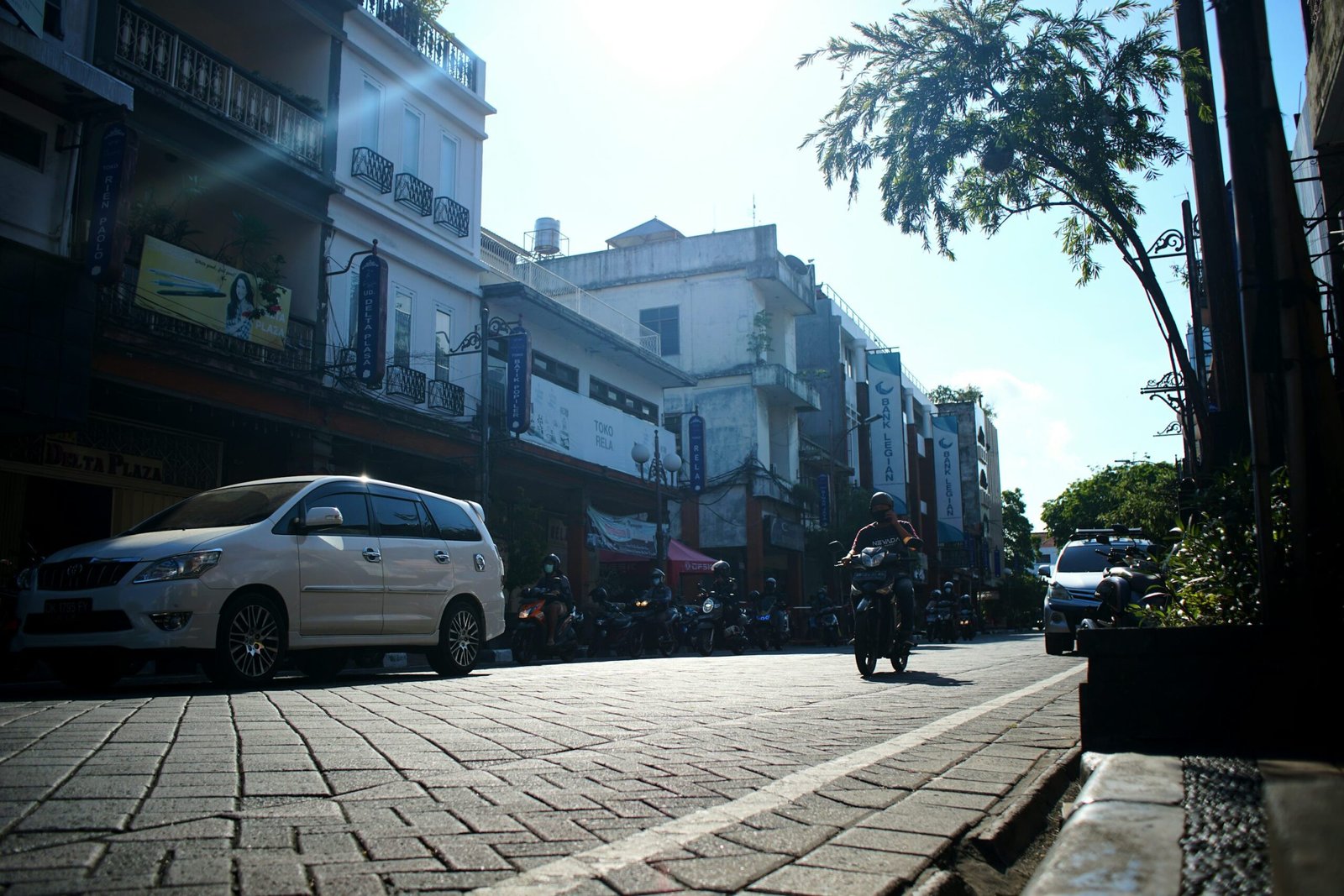
Photo: Wherda Arsianto / Unsplash, used under the Unsplash License. No editorial changes by BaliFinder; display sizes may be generated.
Gajah Mada Heritage Street is a central Denpasar commercial district where older buildings, active shops and the nearby markets tell a connected story. It suits visitors who want to see Bali’s urban life as well as its resorts. The appeal lies in looking carefully at an ordinary working street, where heritage and daily business share the same space.
A trading district with a layered past
Denpasar’s cultural heritage inventory identifies the area’s shop buildings with the development of commerce and Chinese settlement during the colonial period. Their mixed residential and trading use helps explain the tall, multifunctional forms visible along the street. The district is therefore best understood as a place shaped by several communities and changing economic needs.
Avoid expecting every facade to survive unchanged or every business to be a heritage exhibition. A street remains a living environment, and modern signs, repairs and new uses are part of what you will see. Look for relationships between buildings, upper floors and shop entrances rather than searching only for one supposedly perfect historic view.
How to walk the area
Begin with a manageable section of Jalan Gajah Mada and use the market area as an orientation point. Walk slowly enough to notice details above eye level, but stop before looking up so that you do not drift into another pedestrian or the road. An out-and-back route can be easier than improvising a long circuit in the heat.
Keep shop entrances clear and ask before photographing interiors or people at work. Some of the most interesting observations may be small ones: the way goods are displayed, the difference between ground-floor trade and upper-storey architecture, or the movement between street and market. These do not require entering private spaces.
Connect the street with the markets
Badung Market and Kumbasari Market sit around the Badung River and make useful companion stops. They offer different reasons to linger: everyday provisions and trading activity at one, and a stronger arts-and-crafts shopping association at the other. Individual stalls have their own hours, so the wider market’s activity does not guarantee that a particular seller is open.
Kumbasari Park adds a riverfront perspective. Use it as a short pause when access and weather permit, keeping clear of slippery or restricted sections. The street, markets and river together explain more about the area’s organisation than any one stop viewed in isolation.
Shopping and food stops
If something interests you, ask about its material, origin and price before committing. A traditional-looking object is not necessarily locally handmade or old. Buy on the basis of what the seller can explain and what you can inspect, rather than a broad assumption about the district.
For food, choose a business that suits your preferences and ask about ingredients if you have dietary restrictions. Carry small cash for modest purchases and confirm payment options for larger ones. Keep your purchases compact if you intend to continue walking, particularly when moving through narrow or busy sections.
Practical city planning
Choose cooler conditions where possible, wear comfortable shoes and bring water. This is a traffic-bearing commercial area rather than a pedestrian-only heritage enclosure. Cross at suitable points and allow extra time when arranging transport through central Denpasar. A precise pickup location is more useful than asking a driver to find you somewhere on the street.
Bali Museum, Puputan Badung Square and Puri Agung Jro Kuta can extend the theme of city history. Check the access arrangements of those individual destinations before building a longer route around them. Two or three well-chosen stops are usually more satisfying than a rushed sweep of the entire city.
Is Gajah Mada Heritage Street a ticketed attraction?
It is a public commercial street. Purchases, parking, guiding or visits to separate attractions may have their own charges.
Is it suitable for photography?
Yes, especially for streetscape details, provided you remain clear of traffic and ask before photographing people or entering businesses.
Sources: Denpasar culture office: Gajah Mada commercial heritage and Denpasar tourism: heritage map.
Photo: Wherda Arsianto / Unsplash, used under the Unsplash License. No editorial changes by BaliFinder; display sizes may be generated.