Devil’s Tear
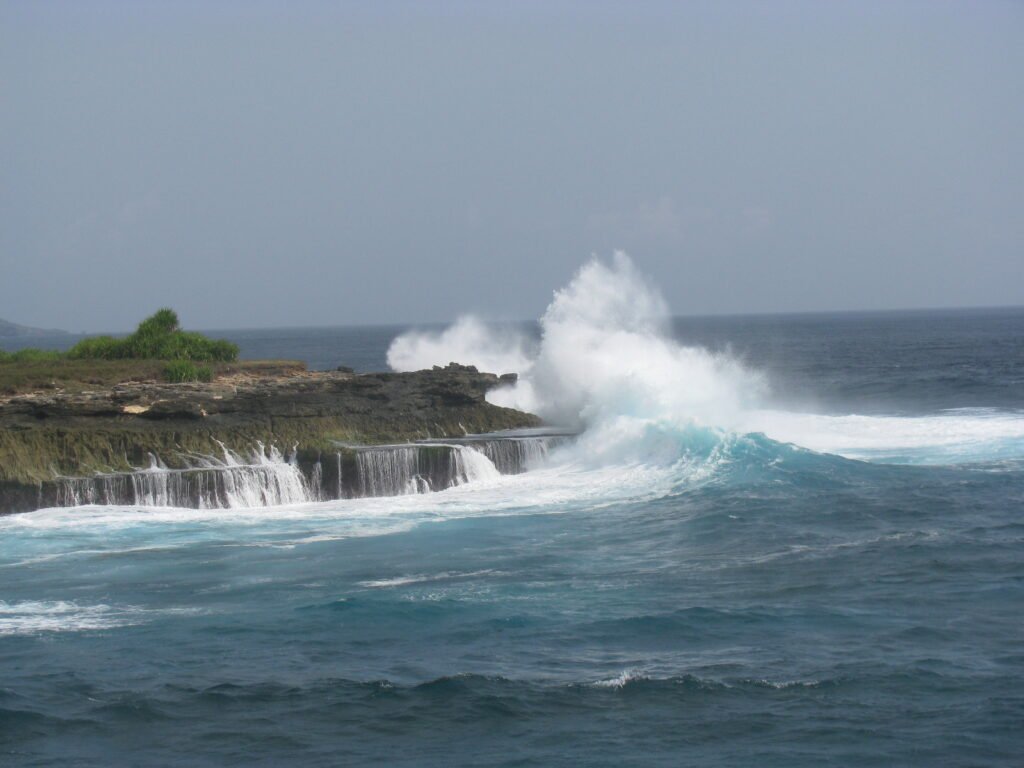
Photo: User:(WT-shared) Burmesedays / Wikimedia Commons, CC BY-SA 4.0. No editorial changes by BaliFinder; WordPress may generate display sizes. Source photograph dated 2009-10-11.

Photo credits
1.
Photo: User:(WT-shared) Burmesedays / Wikimedia Commons, CC BY-SA 4.0. No editorial changes by BaliFinder; WordPress may generate display sizes. Source photograph dated 2009-10-11.
Questions about this place?
Ask about access, facilities or your visit in BaliFinder chat.
Chat with BaliFinderAbout this destination
Devil’s Tear is one of Nusa Lembongan’s best-known coastal viewpoints, visited for the interaction between ocean swell and a rocky shoreline. Its appeal lies in movement: waves arrive, water surges against the rock and spray rises before draining away. That spectacle is also the reason to approach it as an exposed viewpoint rather than a place to climb down or swim.
A good visit does not depend on getting close to the water. From an appropriate viewing position, the sequence of incoming waves can be watched without entering the zone where the largest surges reach. Give yourself time to look first, understand the current conditions and follow the route that site staff consider open.
Why conditions matter more than the photograph
The coast can look deceptively calm between waves. One quiet interval does not establish that a ledge is safe, and a dry-looking patch may still be within reach of a larger surge. Never follow another visitor beyond a barrier simply because they have managed to take a photograph there.
Klungkung’s Tourism Office reported inspecting warning signs at Devil’s Tear and other Lembongan destinations in August 2025. That is a useful reminder to treat on-site instructions as part of the visit. Barriers, closures and staff directions take priority over old travel videos that show people standing in more exposed positions.
How to enjoy the viewpoint
Pause away from the edge and watch several sets of waves before choosing a place to stand. Keep children beside an adult and avoid backing up while framing a photograph. Shoes with grip are more practical than loose footwear on uneven ground, although footwear alone does not make a wet ledge safe.
A longer lens or a modest zoom can show the spray without requiring a closer position. Protect cameras and phones from salt water, and keep loose bags secure in wind. If the conditions are uncomfortable, a shorter visit is entirely reasonable. The strength of the sea should shape the plan, not a desire to complete a fixed photo checklist.
Timing, weather and sunset plans
Light changes the appearance of the water and rock, so photographers may prefer a different time from visitors simply passing through. Late-day light can be attractive, but cloud, wind and crowds affect the experience. Do not promise yourself a particular sunset or assume that late afternoon will bring larger waves.
Arrange return transport before daylight fades. The best viewing position in daylight may be an inconvenient place to leave from after dark, particularly if the approach is unfamiliar. Keep enough time for a calm departure rather than making the last photograph the start of a rushed journey to a boat.
Pairing Devil’s Tear with a Lembongan itinerary
Dream Beach offers a nearby change of scene, while Sandy Bay can provide a dining or resting stop. Mushroom Bay makes another useful reference point when organising accommodation or transport. Confirm your driver’s actual route and inclusions rather than assuming all coastal stops are covered by a single transfer price.
There is no need to combine this visit with every island attraction in one afternoon. Families or travellers who prefer less movement can select one beach and one viewpoint. Visitors seeking a contrasting landscape might reserve a separate outing for Nusa Lembongan Mangrove Forest, where the focus shifts from exposed surf to sheltered waterways and vegetation.
Photo: User:(WT-shared) Burmesedays / Wikimedia Commons, CC BY-SA 4.0. No editorial changes by BaliFinder; WordPress may generate display sizes. Source photograph dated 2009-10-11.