
Tanah Lot Temple
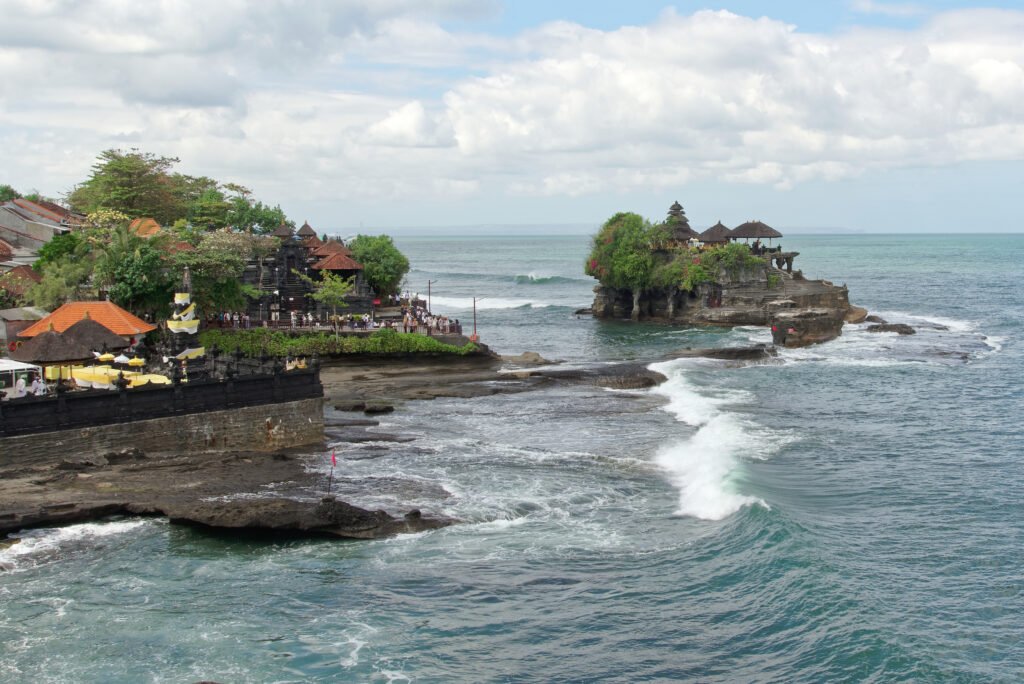
Tanah Lot Temple is a sea temple in Beraban, Kediri, Tabanan Regency. Its signature view is a shrine rising from a rocky coastal outcrop, with the ocean changing the appearance of the setting through the day. At high tide, water surrounds the rock; when the tide retreats, more of the lower shore becomes visible.
The most useful way to plan a visit is to treat Tanah Lot as a coastal temple complex rather than a single photograph. Allow room to walk between viewpoints, notice the neighbouring shrines and appreciate how the sea shapes the site. Sunset is a popular reason to come, but daylight is valuable for seeing the rock formations and details of the landscape.
What to see at Tanah Lot
The sea-temple outlook
The main attraction is the relationship between the temple and the ocean. From the visitor areas, look for a position that includes both the rock and the surrounding water. A wider scene often tells more about Tanah Lot than a tightly framed shot of the shrine. Avoid blocking paths while waiting for a photograph, especially when visitors gather toward evening.
The wider coastal complex
Nearby Batu Bolong Temple occupies a different coastal formation with a natural opening in the rock. It is a separate temple within the wider Tanah Lot outing, not another name for the main offshore shrine. Seeing both helps explain why the area is more than one isolated viewpoint.
Tides and temple access
Low tide does not give visitors automatic permission to enter sacred areas. Follow the local barriers, staff instructions and conditions at the time of your visit. A route that looks exposed can still be affected by incoming waves. Do not step onto wet coastal rocks simply because another visitor has done so.
Keep a distinction between access to the tourist grounds, access near the base of the rock and access to the temple itself. If your plan depends on a particular area being open, ask the management before travelling. The visit remains worthwhile from the permitted viewpoints even when the sea prevents a closer approach.
Sunset or a daytime visit?
For sunset photography, arrive with time to orient yourself and choose a viewpoint before the light changes. Clear skies and colourful sunsets are never guaranteed. A daytime visit can be a better fit if you prefer to focus on the architecture and coastline without tying the entire afternoon to one moment.
Choose a realistic departure plan as well as an arrival time. If you are travelling with a driver, agree on where to meet after the visit. Do not make an immediate onward reservation that depends on leaving the car park at an exact minute.
Getting there and practical planning
Tanah Lot is in Tabanan, on Bali’s southwest coast. Use the destination’s full name when arranging transport so it is not confused with Batu Bolong Beach in Canggu. Check a current travel estimate from your hotel and allow flexibility for traffic. This is particularly useful when combining the visit with an evening meal elsewhere.
Bring sun protection, comfortable walking shoes and enough time for breaks. Confirm any entry, parking or optional activity charges at the authorised point of sale. Tour packages may bundle transport and admission differently; compare the inclusions rather than the headline price alone.
Other places to consider
Taman Ayun Temple provides a contrasting inland temple setting in Mengwi. Seseh Beach is another coastal option, but it should be treated as a separate drive. Build the route around the time you want to spend at Tanah Lot rather than adding stops merely because they are on the same side of Bali.
Frequently asked questions
Can visitors always walk to the temple rock?
No. Tides, sea conditions and local restrictions determine where visitors may go. Follow the permitted route on the day.
Is Tanah Lot only worth visiting at sunset?
No. The coastal formations and temple setting can be appreciated during daylight. Sunset is one way to plan the visit, not a requirement.
References: Indonesia Travel: Tanah Lot and its coastal temples and Tanah Lot visitor overview.
Photo: Jakub Hałun / Wikimedia Commons, CC BY-SA 4.0. No editorial changes by BaliFinder; WordPress may generate display sizes. Source photograph dated 2022-08-27.
