
Manta Bay
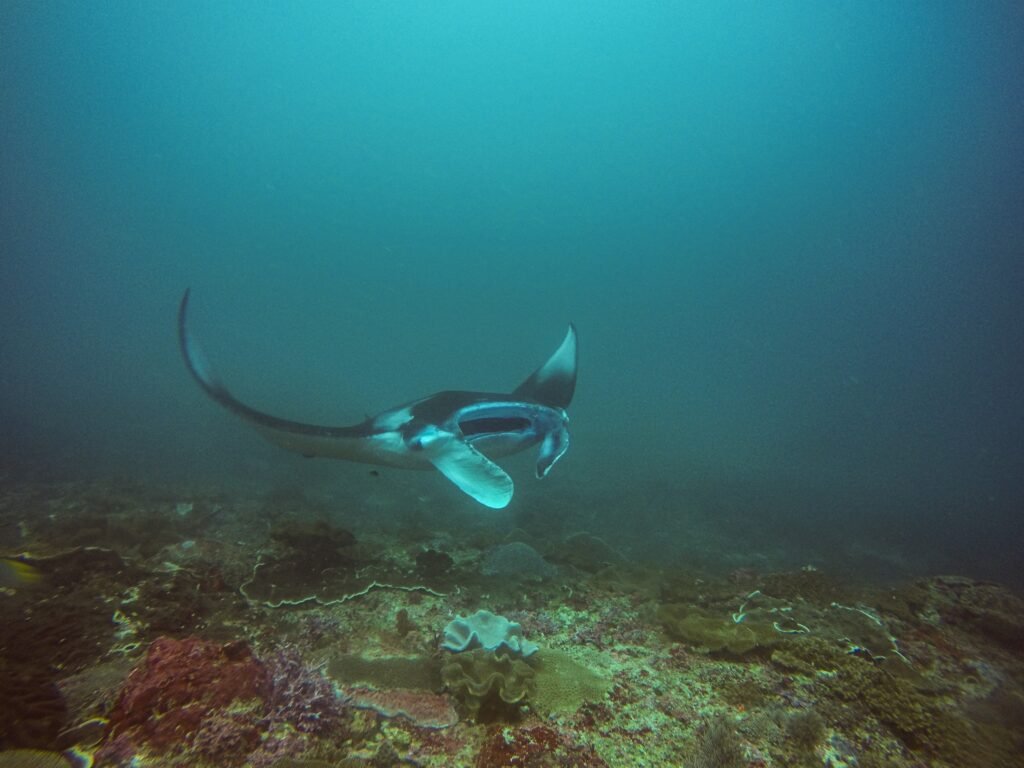
Manta Bay is a marine destination around Nusa Penida where visitors hope to observe reef manta rays in their natural environment. It is often included in snorkeling itineraries, but the attraction should be understood as a wildlife habitat rather than a guaranteed encounter venue. Good planning focuses on a suitable operator, current conditions and how the group will behave around the animals.
A feeding habitat with conservation value
The Marine Megafauna Foundation identifies Manta Bay as a feeding ground used especially by males and young reef mantas, and research indicates that it may serve as a nursery. This makes the site important even on a day when a visitor sees few or no rays.
The animals’ use of the bay depends on natural conditions and their own movements. A tour should allow them to feed and travel without being surrounded. Ask your operator to explain what behaviour you may observe and how the group will avoid interfering with it.
Clarify the destination before booking
Manta Point is a separate marine site associated more strongly with adult cleaning and courtship activity. A package advertised simply as a “manta trip” may not explain which site is intended. Ask for the planned route and the criteria used to change it.
A last-minute substitution is not necessarily a problem if it reflects sea conditions, but it should be communicated clearly. Confirm what the operator promises in terms of service and supervision rather than accepting a claim that wildlife will appear on demand.
Match the outing to your ability
Tell the organiser about your swimming experience and any uncertainty before booking. Ask how guides supervise the group in the water, what equipment is provided and how participants return to the boat. A scenic wildlife photograph does not show the conditions through which the visitor must move.
Attend the full briefing and follow the crew’s instructions. If the sea is unsuitable for your group, choose an alternative or remain out of the water. The opportunity to see mantas should not pressure anyone into an activity beyond their comfort or preparation.
Observe without chasing
Manta Trust guidance emphasises encounters that do not disturb the rays’ natural behaviour. Keep the animals’ route open, do not touch them and avoid swimming after them for a closer view. Let the guide establish where the group should remain.
For photographs, use the opportunity available without trying to control the animal’s direction. A ray feeding or passing naturally is the subject, not a participant in a staged picture. Keep clear of other swimmers and boats, and prioritise the briefing over looking through a camera continuously.
Plan a flexible marine day
Confirm the departure location, return arrangements and any other sites included. Some itineraries pair the manta area with Crystal Bay or Gamat Bay, but each location should be assessed separately. The same conditions and supervision plan do not automatically apply throughout a multi-stop excursion.
Allow time for changing, equipment preparation and transport after the boat returns. Avoid a tight onward ferry or flight connection, and ask what happens if weather causes cancellation. An overnight stay on Nusa Penida or a neighbouring island can give more flexibility than trying to combine a wildlife trip with a full cross-island driving tour.
Frequently asked questions
Does Manta Bay always have manta rays?
No. Sightings depend on wildlife movements and conditions. Its value as a habitat does not translate into a guarantee for an individual tour.
Is Manta Bay suitable for someone who cannot swim?
Do not assume a snorkeling package is appropriate. Discuss ability with a qualified operator before booking and choose a different experience if the activity cannot be matched responsibly to the participant.
Sources: Marine Megafauna Foundation: Manta Bay feeding and nursery habitat; Manta Trust: responsible in-water behaviour.
Photo: Rilando June Lamadjido / Wikimedia Commons, CC BY-SA 4.0. No editorial changes by BaliFinder; WordPress may generate display sizes. Source photograph dated 2022-10-20.
