
Beji Sangsit Temple
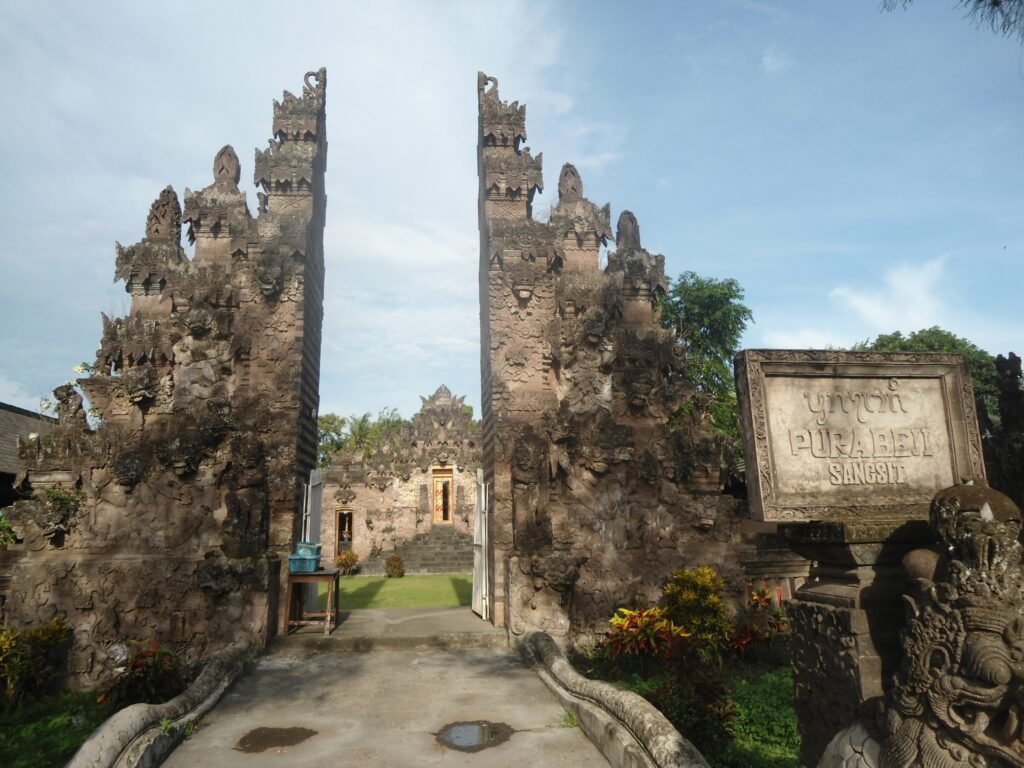
Beji Sangsit Temple is a Hindu temple in Sangsit village, Sawan, east of Singaraja. It is particularly interesting for travellers who want to look closely at North Bali’s architectural decoration rather than simply visit the island’s best-known temple viewpoints. The gateways and carved surfaces reward patient observation from permitted visitor areas.
The temple is a functioning religious site. A visit should be shaped around current access and local guidance, especially if worship or preparations are taking place. Allow time for explanation and looking, rather than arriving only to reproduce a familiar photograph of the entrance.
Looking at the decoration
Sawan district’s cultural material identifies the temple as an example of the area’s distinctive architecture. Its discussion of the enclosed gateway highlights ornamental forms, figures and masks. A local guide can help explain motifs that may otherwise appear as an undifferentiated mass of carving.
Begin with the overall composition before focusing on details. Notice how decoration frames entrances and surfaces, and compare elements without touching them. Do not lean equipment against carved stone or climb onto a base to inspect something more closely. A zoom lens is a better option when detail lies beyond comfortable viewing distance.
Understanding a living temple
Architectural interest does not override religious use. Ask which courtyards are open and follow any requirement for a sarong, sash or other appropriate dress. An open doorway is not permission to enter a space reserved for worship.
Leave offerings where they are, keep routes clear and lower your voice during explanations. Ask before taking close photographs of individuals. If a ceremony changes the visit, accept a shorter route or an exterior view rather than pressing for access to every part of the site.
Practical arrangements in Sangsit
Use Beji Sangsit as the full name when arranging transport. Beji is a name found at other Balinese sacred sites, so the village distinguishes the intended destination. Agree the parking and pickup point before leaving the vehicle.
Check current fees or donation arrangements with the custodian. If hiring a guide, establish the service and price separately so that there is no confusion about what admission includes. Visitors with mobility needs should ask about steps and surfaces before arrival rather than assuming all accessible-looking courtyards are level.
Build a cultural route east of Singaraja
Meduwe Karang Temple provides another opportunity to see distinctive North Bali reliefs, but each temple deserves its own explanation. A thoughtful visit to two sites is more useful than rushing through many without understanding their different contexts.
Gedong Kirtya and Buleleng Museum can add manuscript and historical perspectives to a wider Singaraja stay. Check indoor opening arrangements first, then place temple visits around them. If continuing along the coast towards Air Sanih, carry dry appropriate clothing and avoid arriving at a sacred site straight from swimming.
Frequently asked questions
What is the main reason to visit Beji Sangsit?
Its carved architectural decoration and religious setting make it worthwhile for visitors interested in North Bali’s cultural heritage.
Is a guide useful?
Yes, especially for understanding the motifs and the temple’s role. Agree the arrangement and ask questions respectfully.
Can I photograph the carvings?
Ask about current photography rules and remain in permitted areas. Avoid touching or climbing on the architecture to obtain a closer angle.
Sources: Sawan district: Pura Beji Sangsit; Sawan district: Sangsit history and gateway decoration.
Photo: DayakSibiriak / Wikimedia Commons, CC BY-SA 4.0. No editorial changes by BaliFinder; WordPress may generate display sizes. Source photograph dated 2015-01-06.
