
Margarana Memorial Park
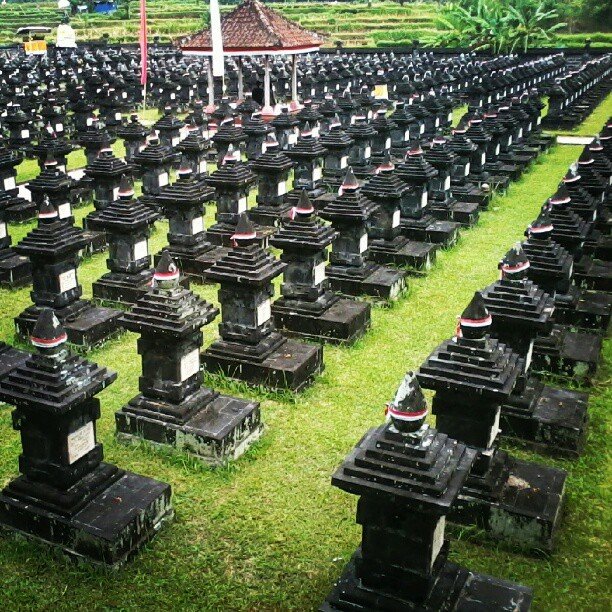
Margarana Memorial Park is a place to engage with Bali’s independence history. Known as Taman Pujaan Bangsa Margarana, it commemorates the struggle associated with I Gusti Ngurah Rai and the battle of 20 November 1946. The site belongs in an itinerary for its historical meaning, with time for reading and reflection rather than a brief stop for monument photographs.
The history behind Margarana
The battle took place in the Marga area during Indonesia’s struggle to defend independence against returning Dutch forces. I Gusti Ngurah Rai led the republican Ciung Wanara force. He and members of his force died in the fighting, and the event became known as Puputan Margarana. The word puputan is associated here with an uncompromising struggle to the end.
The date remains part of Bali’s public remembrance. Provincial government reports document commemorations at the site, connecting the physical memorial with continuing civic ceremonies. This context helps visitors understand why the grounds should be approached as a place of mourning and national memory, even when no formal ceremony is taking place.
Memorial and museum
The national museum catalogue locates the complex in the Kelaci area of Marga Dauh Puri, Tabanan. It describes a museum collection connected with the battle, including photographs, clothing, weapons, and other wartime objects. It also identifies the Candi Pahlawan Margarana monument and an inscription of Ngurah Rai’s reply to the Dutch commander Termeulen.
Use the museum and memorial together if both are accessible. The monument establishes the public act of remembrance; the objects can help bring the story back to individuals and the conditions in which they lived and fought. Ask staff which galleries are open and whether someone can explain key documents rather than assuming all displays will have extensive English interpretation.
Reading the site thoughtfully
Begin with the chronology before trying to interpret every object. Place the battle after Indonesia’s proclamation of independence in 1945, then consider why armed conflict continued. This avoids the common mistake of treating independence as a single day that immediately ended colonial power everywhere.
When reading memorial inscriptions, distinguish commemorative language from the practical details of a military timeline. A local guide or museum staff member can help explain names, titles, and terms. If accounts give different casualty figures, do not let an uncertain number dominate the visit; the documented event, people, and purpose of remembrance provide a stronger foundation.
Respectful visiting
Wear neat, modest clothing and keep your voice low around memorial and burial areas. Do not climb monuments, sit on grave markers, or move offerings for a photograph. Ask permission before photographing ceremonies or people paying their respects, and follow staff instructions about photography inside the museum.
Families can introduce the visit through age-appropriate questions about courage, loss, and remembrance. Explain beforehand that the site is not a playground. If a commemorative event is underway, allow participants space and be prepared for access to change. A quiet visit outside a ceremony and attendance at a public remembrance event are different experiences.
Combining Margarana with other stops
Subak Museum offers a complementary account of Tabanan’s agricultural heritage, while Pinge Village can add a village-focused visit if arranged locally. Choose a route that leaves time to absorb the memorial rather than immediately rushing between unrelated attractions.
Do not confuse this site with Puputan Margarana Square or Bajra Sandhi Monument in Denpasar. Those are separate places. Give your driver the full Tabanan location and check the map pin before departure, especially if your itinerary includes several monuments with similar historical names.
Frequently asked questions
What does Margarana Memorial Park commemorate?
It commemorates the independence struggle associated with the battle of 20 November 1946 and I Gusti Ngurah Rai’s Ciung Wanara force in the Marga area.
Is there a museum?
Yes, national museum documentation describes a museum within the memorial complex. Confirm current gallery access, interpretation, and admission arrangements before travelling.
Can I visit during a ceremony?
Access depends on the event and organisers. Follow on-site directions and avoid interrupting participants; advance confirmation is especially useful around 20 November.
Sources: Ministry of Culture encyclopedia: Puputan Margarana; National museum catalogue: Museum Monumen Taman Pujaan Bangsa Margarana; Bali provincial government: visit to Taman Pujaan Bangsa Margarana.
Photo: yohana wina / Wikimedia Commons, CC BY 2.0. No editorial changes by BaliFinder; WordPress may generate display sizes. Source photograph dated 2012-11-21.
